Raise 3 x more with peer-to-peer fundraising: Your ultimate how to guide made simple
Published
June 20, 2024

Peer-to-peer fundraising empowers your supporters to raise funds on your behalf, leveraging their networks to amplify your cause. Here’s a concise guide to help you master this strategy and raise 3 x more!
Peer-to-peer (P2P) fundraising recruits individual fundraisers from your community to raise donations for your organisation. These fundraisers create personal profiles to share their passion, engaging friends and family to donate. This method capitalises on social proof, where personal stories and connections drive contributions.
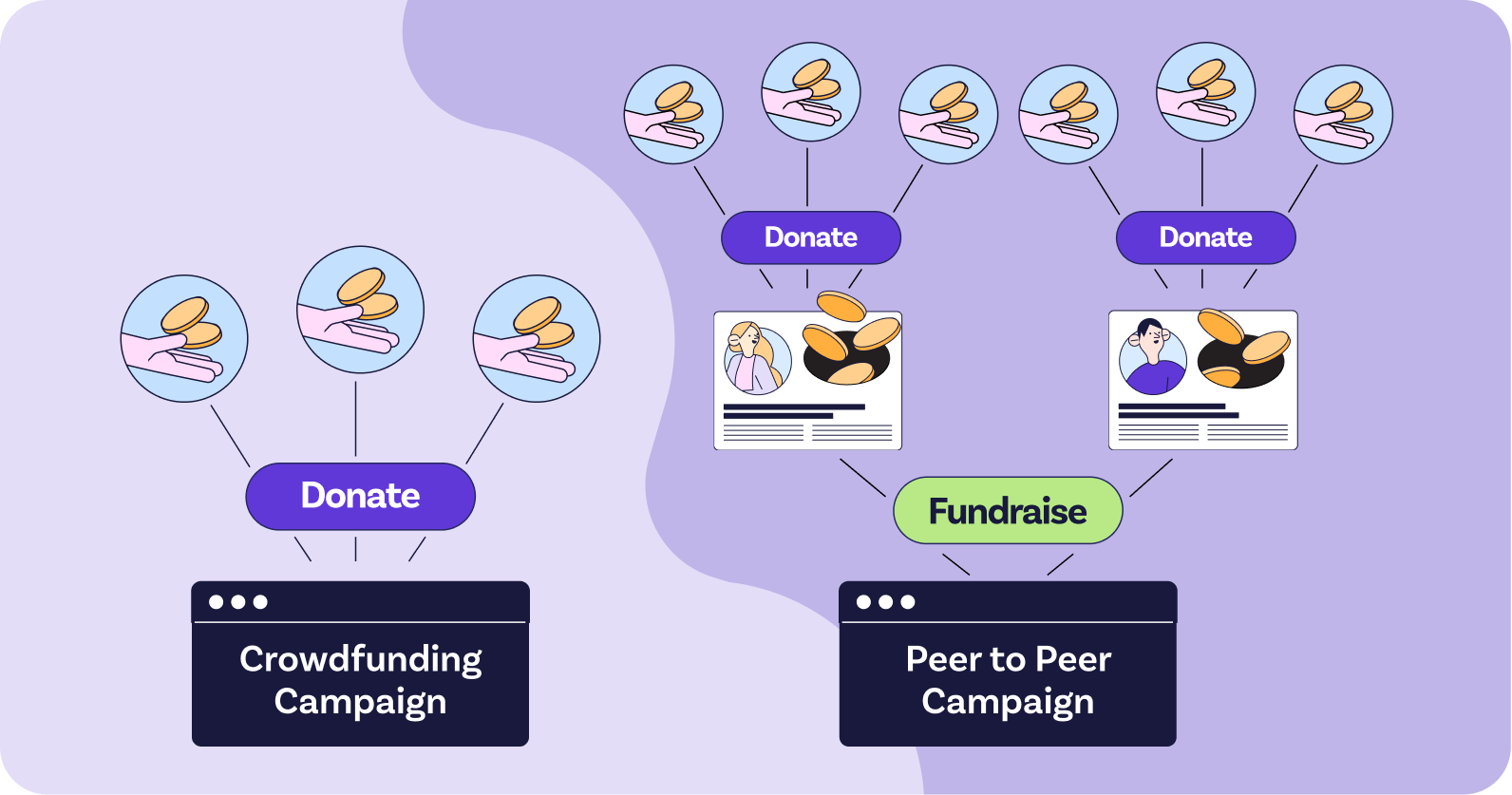
On Raisely, we know that peer-to-peer campaigns raise 3x the amount of other fundraising campaigns! As a winning strategy, we also see:
Broader Reach: Fundraisers tap into their networks, reaching potential donors you might not access otherwise.
Increased Donations: Personal appeals from friends and family are compelling, often leading to higher donations.
Community Building: P2P campaigns foster a sense of community, encouraging fundraisers to connect over a shared mission.
Adaptability: Suitable for both virtual and in-person events, making it a reliable option regardless of external conditions.
Imagine your community coming together, fueled by passion for your cause, to raise money for your organisation. That’s the essence of peer-to-peer fundraising!
Here are some inspiring ideas to help your supporters get started:
DIY campaigns let your fundraisers get creative without the need for a big budget. Take UNICEF Australia's Ukraine P2P campaign, where one participant designed a quilt square in Ukraine’s colors and raised over $238,000, smashing her initial goal of $5,000.
Ambassador campaigns involve a select group of star fundraisers, often local celebrities, competing for the most donations. These campaigns thrive on engaging followers through live events or social media challenges.
Challenges foster friendly competition and leverage social media. Examples include walkthaons, fun runs, TikTok dance challenges, you name it! The Strava integration on Raisely helps track all sorts of activities - customise your own! Forever Projects’ “What’s Your Kilimanjaro?” challenge had participants cover the mountain's elevation or distance in their own way, raising funds for children in Tanzania.
Modern fundraising events can be virtual, hybrid, or asynchronous, reducing costs and volunteer effort. SurfAid’s Make a Wave campaign exemplifies this by rallying thousands of surfers worldwide in a 30-day challenge. This initiative raises crucial funds to support families living near some of the world’s most remote waves, who struggle to access basic services such as healthcare, clean water, sanitation, and food security.
Each of these campaign types can engage your community and drive significant support for your cause.
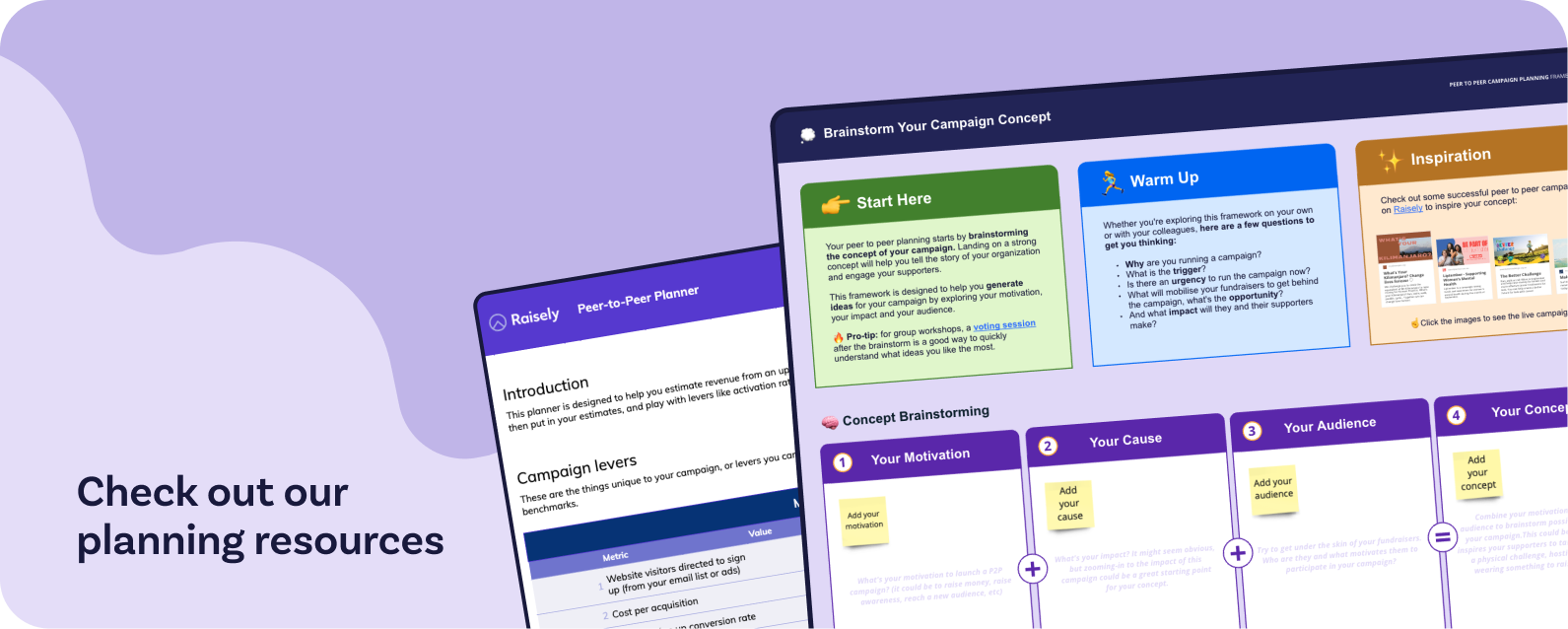
Got an idea that really represents your mission and has the power to mobilise your community? It’s time to start planning! Use our P2P fundraising framework which walks you through these four major planning phases:
Align your campaign with your mission and supporters' interests. Ensure it has urgency and a clear impact. Take Starlight's Children's Foundation, who decided to create a swim challenge when they learned there were no major peer-to-peers focused on swimming in Australia.
How to build on your concept and shape a key message, challenge, campaign name, and call to action. You'll also break down your fundraising targets and plan the resources needed. Use our handy P2P Planner to help estimate revenue for your overall campaign goal.
Develop a strategy to promote your campaign and engage your community. Your plan should cover how different groups within your community will hear about your P2P. Create sharable materials that tell your nonprofit’s story to equip and further support your fundraisers.
Map out the experience for your fundraisers from start to finish, ensuring they feel supported and recognised. Raisely’s peer-to-peer template comes with a set of automatic messages that form a basic skeleton for your campaign and are fully customisable.
At the very least, your supporter journey should include the following steps:
Engage Constantly: Monitor social media and other channels to respond to your fundraisers.
Recognise Top Performers: Highlight top fundraisers and donors.
Optimise for Mobile: Ensure donation pages are mobile-friendly.
Regular Updates: Keep your community informed with progress updates and motivational messages.
Activation Rates: Track how many supporters sign up and raise funds. On Raisely we see an activation rate of 78%.
Average Raised: Monitor the average funds raised by individuals and teams. Our average fundraising per profile is $302.
Total Funds Raised: Measure against your goals and adjust strategies as needed.
Giving Trends: Identify patterns to optimize your fundraising efforts.
When all is said and done, it’s time to celebrate the impact your community makes. Email your fundraisers and donors with details about the amazing impact of the campaign and what you’ve achieved together, including the total funds raised and exactly what you’ll be doing with their donations. Show them your heartfelt appreciation and make sure they know how they can stay in touch with your charity.
Finally, ask your team for feedback and note what worked and didn’t work for your next peer-to-peer fundraising campaign.
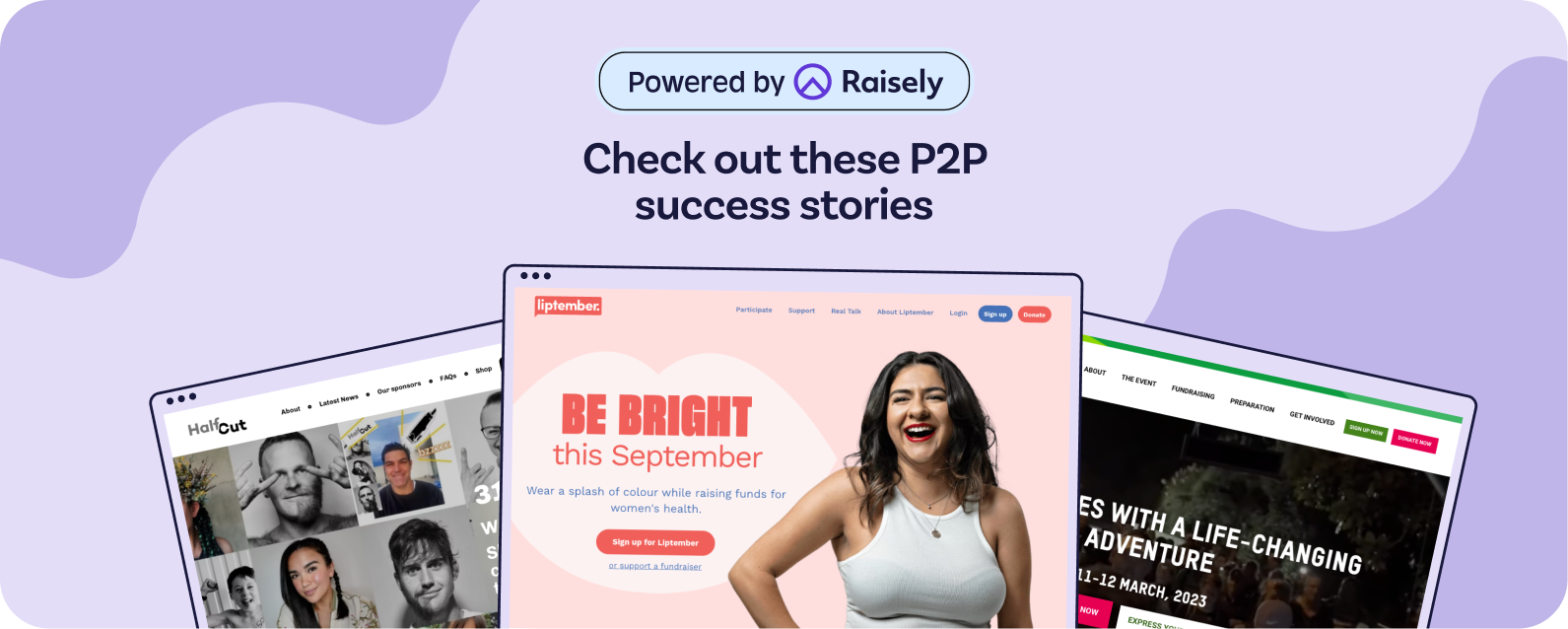
We’ve seen a lot of successful peer-to-peer campaigns on Raisely soar past their fundraising goals while igniting social movements to create positive change. Here are a few standout success stories:
[HR]
Peer-to-peer fundraising has proven to be an effective and engaging strategy for nonprofits. With platforms like Raisely, even small organisations can launch professional-quality campaigns. Ready to get started? Sign up for Raisely and customise your peer-to-peer campaign today!
With another B Corp recertification done and dusted, we are certainly proud of our new score and well aware of the progress that will continue! Want to join us and team up with the fundraising platform that shares your mission? 🙋🏼♀️