Donor stewardship: 3 characteristics you need to succeed
Published
January 19, 2023


Donor stewardship allows nonprofits to maintain and grow their relationships with key supporters. What characteristics make an effective stewardship approach?
For nonprofits, success is built on strong, effectively managed relationships. Donors should feel that they’re integral parts of your story, actively driving your work as philanthropic partners. At all giving levels, you should express gratitude and constantly look for new ways to keep donors involved.
And as organisations grow, the importance of maintaining and growing relationships with key supporters grows, too. The classic “80/20” rule generally holds true—around 80% of donated funds come from just 20% of an organisation’s top donors. The outsized impacts of these supporters mean they require extra attention, personalised communication, and ample engagement opportunities.
While donor acquisition remains an essential part of the equation, putting in the work to engage and retain these key donors is one of the best investments you can make in your organisation’s long-term success. This is why successful nonprofits focus heavily on donor stewardship.
Donor stewardship encompasses all of the activities and outreach nonprofits conduct to maintain and grow their relationships with donors, with the ultimate goal to receive larger gifts in the future. Stewardship is often discussed specifically in relation to mid-level and major donors. Since there are fewer of them, and their impact is larger than that of smaller-value donors, the importance of retaining their support through stewardship is heightened. Donor management software can assist in these activities.
Nonprofit development staff and gift officers typically handle stewardship as part of their day-to-day work.
But even if your growing organisation doesn’t have a dedicated development team or major gift officer, you should still prioritise stewardship—not only out of respect for your donors and your relationships with them, but also because a “major gift” looks different for every nonprofit. By intentionally fostering relationships with your donors who make the biggest impacts, you can strengthen their connection to your mission and secure more support over time. For many organisations, this is a great opportunity to involve your board in fundraising. Having your board maintain thoughtful relationships with major donors demonstrates the value of those supporters.
An efficient and effective approach to donor stewardship will yield dividends for your organisation in the long run. What does an effective stewardship program look like? What characteristics should you instil in it? We’ve gathered the four most important elements to keep in mind.
An organised approach is key when managing relationships and keeping track of donor touchpoints over time. The exact steps you take to stay organised internally will vary from organisation to organisation, but there are a number of standard best practices and resources to keep in mind:
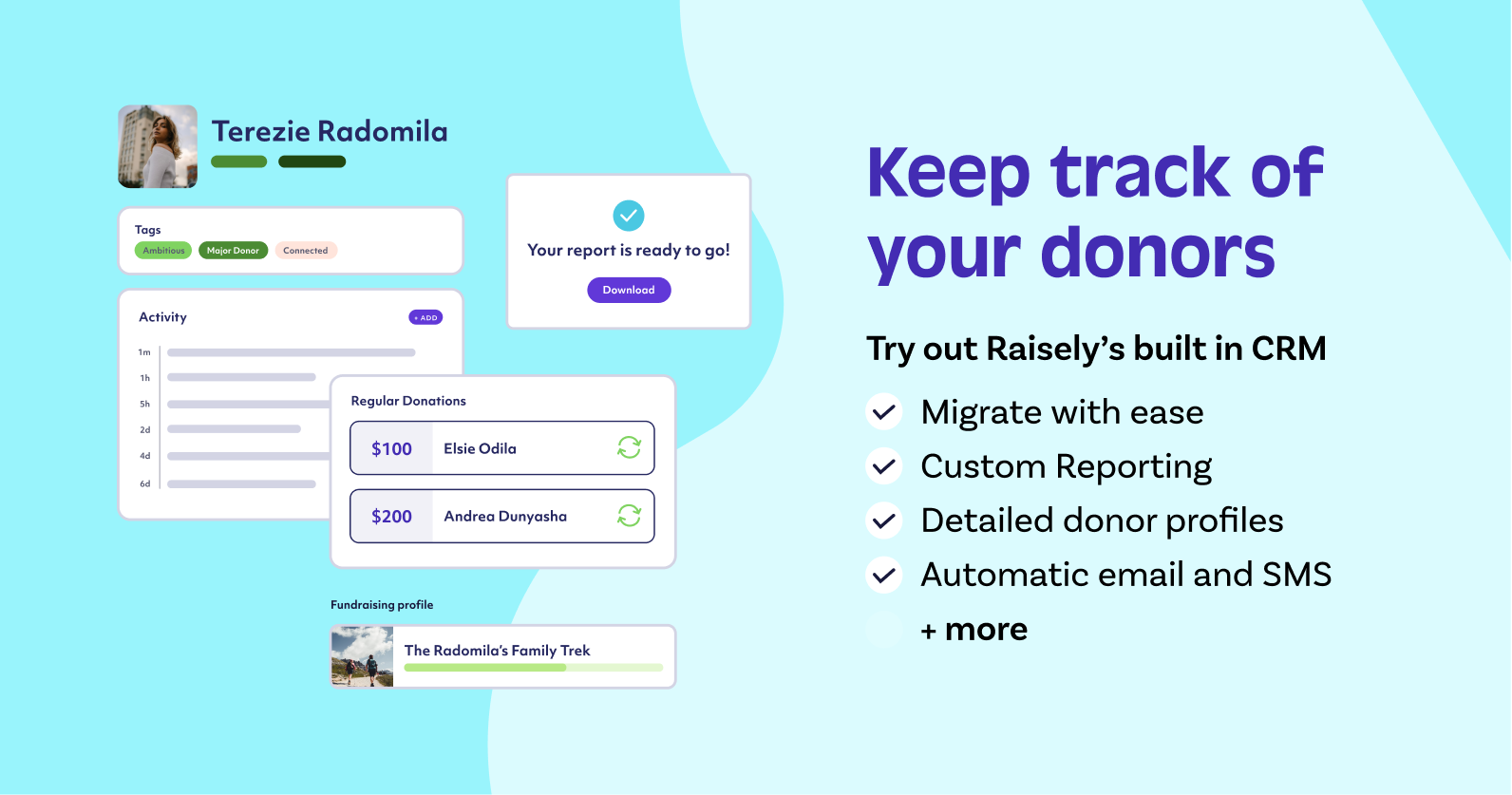
Keeping information about donors organised is key to a successful stewardship plan, but remember that keeping that information up-to-date and refreshed with new insights is equally important—this is where data comes in.
When stewarding relationships with high-impact donors, nonprofits typically have two objectives: 1) growing the donor’s relationship and positive feelings towards the organisation, and 2) ensuring that the donor will be inclined to give more (and larger) gifts in the future.
This process of cultivating future gifts through relationship-building needs to be data-driven. The steps you take and the outreach you conduct should be informed by insights from various sources, including:
Gathering, using, and updating this information is immensely useful for a few reasons:
This last point is especially important for effective relationship management. Donor qualification is the process of regularly re-evaluating key criteria to determine whether or not a donor or prospect should currently be prioritised for outreach. This may involve disqualifying a donor from further gift cultivation, or it could entail conducting prospect research on a donor to discover that they have the capacity to make a larger gift in the future.
But aside from the fundraising objective of cultivating larger gifts through stewardship, data is still essential. Learning more about donors’ interests and their histories of engagement with your organisation will ultimately allow you to better allocate your time and build more personalised relationships. Just remember to practise data hygiene best practices along the way.
Finally, remember that the key to stewardship of high impact donors is personalisation. After all, it’s an exercise in relationship-building—strengthening their connections to your mission and empowering them to have an increased impact on the cause they care about.
For example, consider grateful patient fundraising conducted by healthcare institutions: These relationships are built on intensely personal connections between patients and healthcare providers, so relationship-building and mutual gratitude are heavily emphasised.
But any organisation that relies on donors to make an impact in the community should do the same.
One-on-one conversations and casual meetings, frequent check-ins to simply see how the donor is doing or to ask for their thoughts, involvement in an upcoming campaign’s feasibility study, special event invitations, and more should be done to keep donors engaged and learn more about them. The best practices discussed above—portfolios, well-configured tech, internal collaboration, and up-to-date data—will help ensure this is a smoothly managed process.
For donors who aren’t at the major giving level, personalisation is still important. No one wants to feel like just another number when they’ve given their hard-earned money to support your cause! Periodic personal outreach to mid-level donors and special event invites can help. For your broadest base of support, create engaging email journeys, auto-populate communications with donors’ names, send surveys to learn more about them and their interests, and provide a range of opportunities to get involved, like peer-to-peer fundraising, a variety of events, and volunteer sign-ups.
[HR]
Effective donor stewardship is a foundational part of sustainable long-term growth for nonprofit organisations. And while it may seem like a complex process of managing communications, portfolios, databases, and more, remember that the characteristics described above are tightly interrelated and support one another—if you achieve one, you’ll set yourself up well to achieve the others.
With another B Corp recertification done and dusted, we are certainly proud of our new score and well aware of the progress that will continue! Want to join us and team up with the fundraising platform that shares your mission? 🙋🏼♀️